
Most e-commerce stores struggle with consistent organic traffic due to poor keyword research. They focus on high-volume keywords that are too competitive, especially for a brand new website, instead of identifying search terms that actually match buyer intent.
The truth is, search engines like Google don’t reward the biggest keywords alone. They reward relevance, clarity, and pages that best match search intent. This is where a proper keyword research process becomes the foundation of successful search engine optimization.
In this article, we break down how e-commerce keyword research helps you identify high-intent keywords that bring targeted traffic, increase organic visibility, and ultimately drive sales. Instead of chasing broad terms, you’ll learn how to find keywords that align with real search behavior and commercial intent.
Why Most E-Commerce Keyword Research Fails
Most beginners start keyword research by looking at search volume. At first, this seems logical. A keyword with thousands of monthly searches looks far more valuable than one with only a few dozen.
But search volume alone does not equal profit.
For example, a seed keyword like “stairs” may generate high search volume, but it is too broad. People using that search query could be looking for designs, contractors, or general information.
In fact, Backlinko’s analysis of 306 million keywords revealed that 91.8% of all search queries are long-tail keywords, proving that most people search for specific phrases, not broad terms. Search engines cannot clearly interpret intent from such a vague query, and neither can you.
On the other hand, a specific keyword like “48-inch white oak stair tread” has lower search volume, but much higher conversion potential. This type of transactional keyword signals clear buying intent. The user knows exactly what they want and is closer to making a purchase decision.
This is where many e-commerce websites fail. They chase traffic instead of targeting relevant keywords that actually convert.

Understanding Search Intent and Keyword Types
Effective keyword research is built on understanding search intent. Every search query falls into a stage of the customer journey, and matching keywords to the right pages is essential for ranking and conversions.
Top-of-funnel keywords are informational and often used in blog posts. These include searches like “best wood for stair treads” or “modern staircase ideas.” They generate awareness and help search engines understand your content, but they rarely lead to immediate sales.
Middle-of-funnel keywords show comparison behavior. Examples include “red oak vs white oak stair treads” or “cost of floating stairs.” These keywords are ideal for category pages or detailed guides because they reflect users evaluating options.
Bottom-of-funnel keywords are the most valuable for e-commerce SEO. These are commercial and transactional keywords such as “buy white oak stair tread” or “48 inch white oak stair tread near me.” These search queries indicate strong purchase intent and should be targeted on product pages.
Understanding this structure ensures your keyword list is aligned with both search behavior and relevant pages on your site.
How to Find Relevant Keyword Ideas
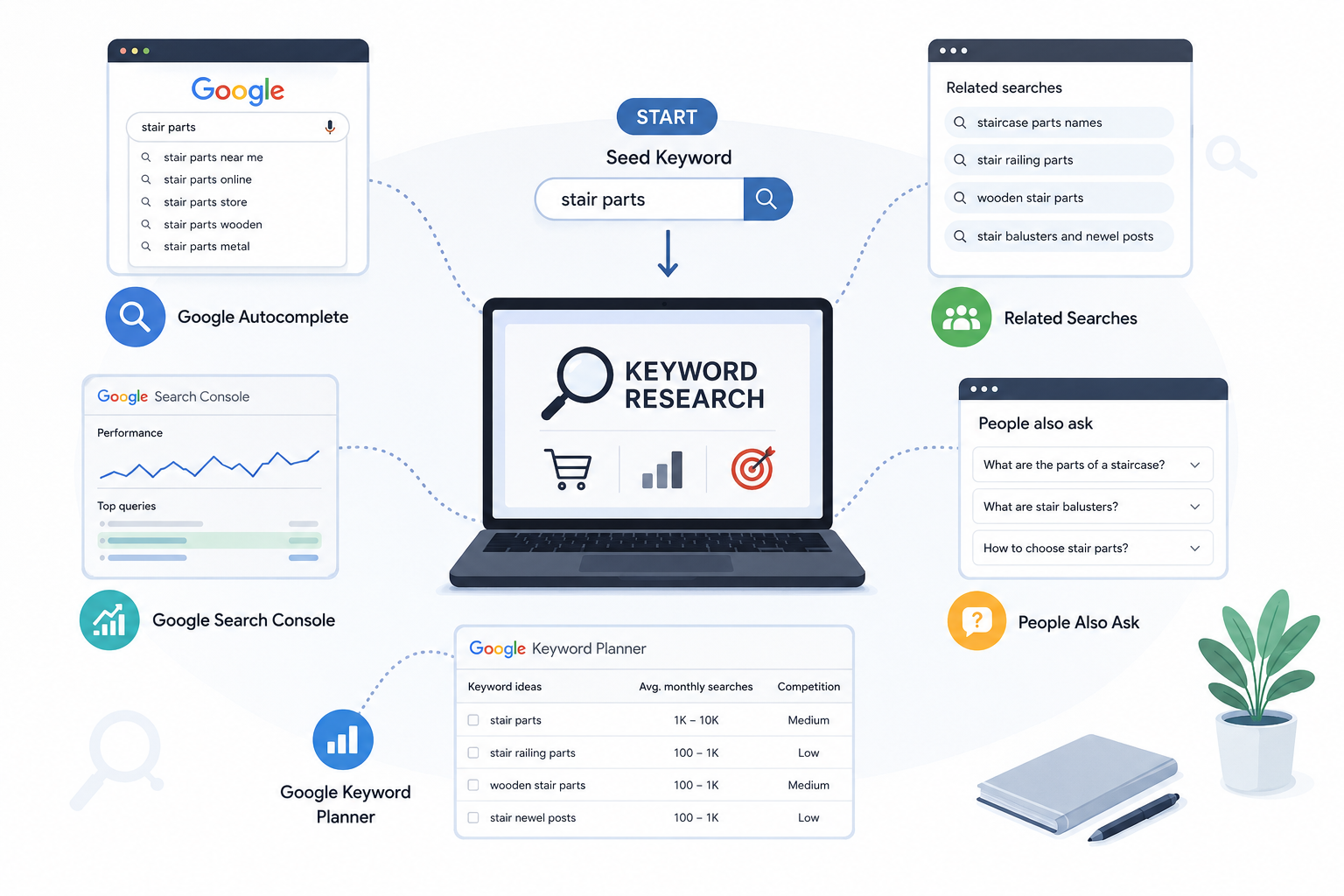
The keyword research process starts with a seed keyword. This is a simple term related to your product or niche. From there, you expand into relevant keyword ideas using multiple sources.
- Google Autocomplete is one of the simplest free tools. When you type a product-related search into Google search, it automatically suggests relevant search terms based on real user behavior. These suggestions often reveal long tail keywords with clear intent.
- At the bottom of Google search results, the “related searches” section provides additional keyword ideas that reflect actual search patterns. These are often overlooked but highly useful for expanding your keyword list.
- The “People Also Ask” section is another powerful source. It helps you identify informational queries that can be turned into blog posts, FAQs, and supporting content that strengthens your SEO keywords strategy.
- Google Search Console is also critical for identifying search terms your site already ranks for. Many e-commerce stores already appear in Google search results on page two or three without realizing it. Optimizing these pages can significantly increase organic traffic.
- Google Keyword Planner is a free tool that provides keyword data such as monthly search volume, keyword ideas, and competition levels. While it was designed for ads, it is widely used for keyword research in SEO.
Using Keyword Metrics to Choose the Right Keywords
Once you gather a keyword list, the next step is evaluating keyword metrics. This includes search volume, keyword difficulty, and relevance.
Search volume tells you how often people search for a given keyword each month. However, higher volume does not always mean better performance.
Keyword difficulty shows how hard it is to rank for a specific keyword. New stores should prioritize low difficulty keywords and low competition search terms, especially when building early organic traffic.
Relevance is the most important factor. A keyword may have high volume and low difficulty, but if it does not match your product or target audience, it will not convert.
Competitor keyword research is also useful. Paid tools like Ahrefs or SEMrush can also help you identify keywords competitors rank for, allowing you to find gaps and opportunities they may be missing.
Mapping Keywords to the Right Pages
Keyword research is not just about building a keyword list. It is about mapping each keyword to the correct target page.
This step ensures search engines clearly understand your site structure. A primary keyword should only belong to one page to avoid keyword cannibalization, where multiple pages compete for the same search results.
Homepage pages typically target broad e-commerce keywords. Category pages target mid-level commercial keywords, while product pages focus on specific transactional keywords.
For example, a product page may target “48-inch white oak stair tread,” while a category page targets “white oak stair treads.” Blog posts support the structure by targeting informational search queries and long tail keywords.
This structure helps search engines understand your website hierarchy and improves ranking potential across all relevant pages.
Optimizing Content for SEO Keywords
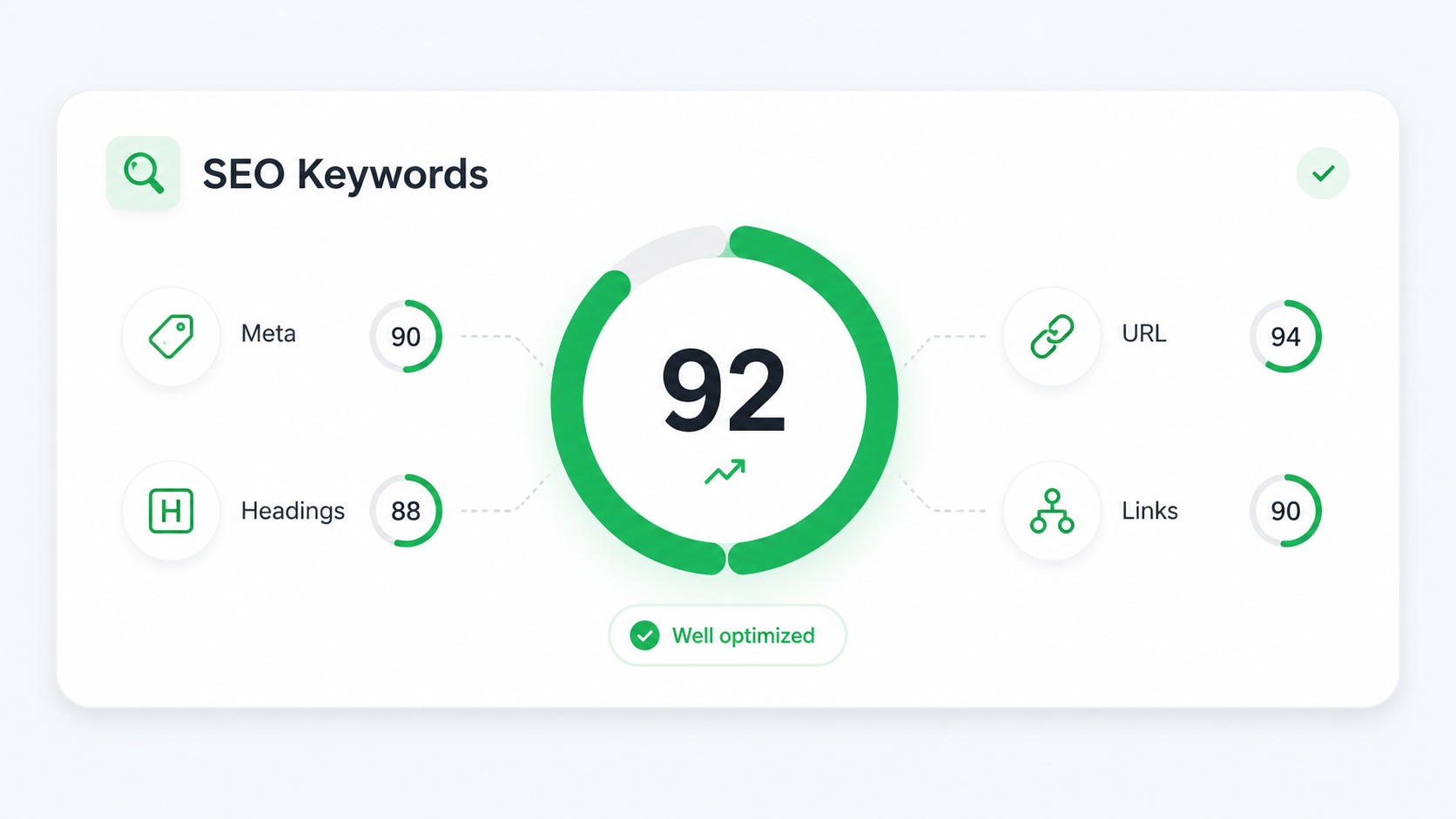
Once keywords are assigned, they should be naturally integrated into page content. This includes meta titles, meta descriptions, descriptive URLs, headings, and image alt text.
Search engines use these signals to understand what a page is about and how it should appear in search results. However, keyword placement should always feel natural. Over-optimization can harm rankings instead of improving them.
Internal links also play a key role. Linking between relevant pages helps search engines discover content and understand relationships between different keyword themes.
High-quality product pages should focus on clear descriptions, strong relevance, and alignment with search intent. This improves both rankings and conversion rates.
Building Organic Traffic Through Content Strategy
Keyword research is not a one-time task. It is an ongoing process that drives content creation.
Once your core product and category pages are optimized, you can expand into blog posts that target informational keywords. These posts help attract users at the top of the funnel and guide them toward commercial pages over time.
As your content grows, you build topical authority, which improves rankings across all related search queries.
This is how e-commerce stores move from low visibility to consistent organic traffic. Instead of relying on broad keywords, they focus on structured keyword research backed by intent, relevance, and strategic content creation.
Final Thoughts
Ranking #1 on Google is not about chasing the highest search volume keywords. It is about understanding how search engines interpret intent and how users search for products.
Effective e-commerce keyword research combines keyword tools, search data, and competitor insights to build a structured keyword list based on relevance and intent.
When you focus on high-intent keywords, match them to the right pages, and build content around search behavior, you give your store a real opportunity to increase organic traffic and rank for profitable search results.
The stores that succeed with SEO are not the ones targeting the most keywords. They are the ones targeting the right keywords.
At Search Pros, we help e-commerce businesses turn keyword research into real rankings, traffic, and sales.
Get in touch with us to get started.