
Google Ads can feel overwhelming, even for business owners who have a lot of marketing experience.
Open the dashboard, and you’ll immediately encounter bidding strategies, audience signals, campaign settings, conversion goals, ad groups, and countless other options. Without a strong understanding of the fundamentals, it’s easy to start following random tutorials or implementing tactics without fully understanding why they work.
The truth is that successful Google Ads campaigns are rarely built on advanced strategies alone. Most profitable e-commerce stores focus on building a strong foundation before they ever launch their first campaign. Understanding your numbers, setting up accurate tracking, optimizing your product feed, and choosing the right campaign type will have a much greater impact on results than any advanced tactic you may come across later.
Understand Your Numbers Before You Spend a Dollar
One of the biggest misconceptions about Google Ads is that simply running ads will generate sales. In reality, every click has a cost, whether or not the visitor buys.
Your cost per click (CPC) is the first number you need to understand. With a $500 budget and a $1 average CPC, you can drive roughly 500 visitors; if CPC rises to $2, that same budget only brings about 250 visitors. From there, your conversion rate determines how many of those visitors become customers. At a 1% conversion rate, 500 visitors translate into around five sales.
The next question is whether those sales are actually profitable. This is where your average order value (AOV) and profit margin matter. If five orders generate $375 in revenue but you spent $500 on ads, you’re already negative before product costs, shipping, payment fees, and overhead are considered.
Before launching any campaign, you should know your typical CPC, conversion rate, AOV, and margin. These inputs let you calculate break‑even CPC and CPA, so you can see, on paper, whether Google Ads has a realistic chance of driving profitable growth instead of finding out after burning through budget.

Accurate Conversion Tracking Is Essential
Google’s automation is only as effective as the data it receives. If your tracking setup is inaccurate, the platform will optimize toward the wrong outcomes, making it difficult to achieve consistent results.
For most e-commerce businesses, purchases should be the primary conversion action being tracked. While actions such as page views, product views, or add-to-cart events can provide useful insights, they should not replace purchase tracking as the primary success metric.
Before launching any campaign, it’s important to place test orders and verify that completed purchases are being recorded correctly. Enhanced Conversions should also be enabled to improve attribution accuracy and help Google better understand which clicks are generating revenue. In addition, businesses should confirm that conversion values are being passed properly so the platform can accurately measure return on ad spend.
Poor tracking can make a profitable campaign appear unsuccessful or make an underperforming campaign look better than it actually is. Without reliable data, making informed optimization decisions becomes nearly impossible.
Product Feed Is the Foundation of Performance
For Shopping and Performance Max campaigns, your product feed is one of the most important performance levers in the entire account. Your feed supplies Google with core product data titles, descriptions, pricing, availability, images, categories, and brand, which directly influence when and where your products are eligible to appear.
Many advertisers over‑tweak campaign settings while overlooking feed quality, even though product data often has a more direct impact on visibility and efficiency. Strong feeds use descriptive titles, high‑quality imagery, accurate pricing, and complete attributes, and they’re monitored regularly in Google Merchant Center for disapprovals, policy issues, or feed errors that can stop products from serving entirely. In many underperforming accounts, the core issue isn’t bid strategy; it’s that key products are disapproved, limited, or ineligible to show in Shopping results at all
Choosing the Right Campaign Type
For most e-commerce stores, two campaign types deserve the majority of attention: Shopping Ads and Performance Max.
Shopping Ads display product images, prices, store names, and product information directly within Google search results. Because users can see important product details before clicking, the traffic generated from Shopping Ads is often highly qualified and closer to making a purchase.
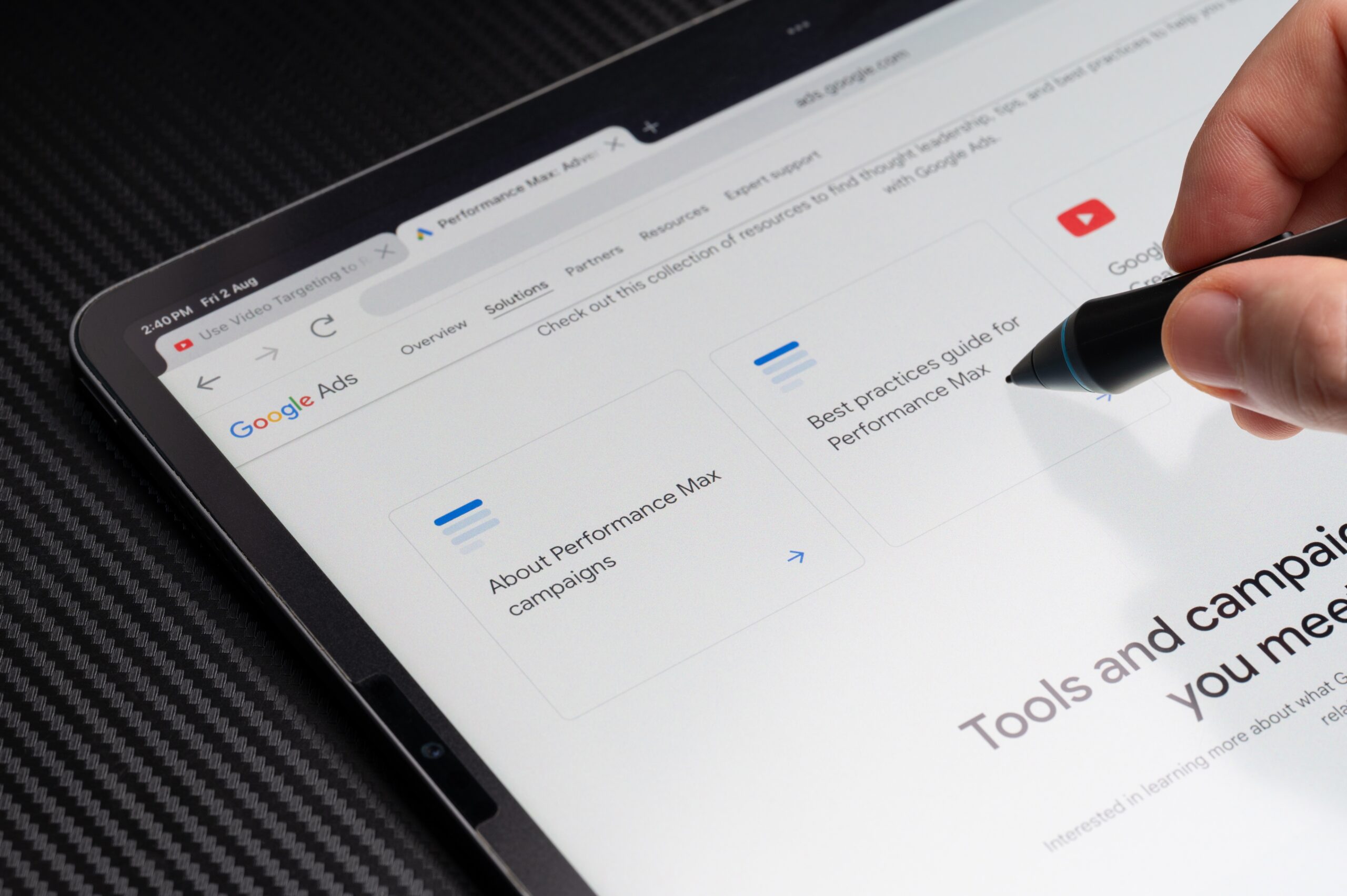
Performance Max campaigns take a broader approach by running across Google’s entire ecosystem, including Google Search, the Google Display Network, YouTube, Gmail, and Discover. These campaigns use machine learning, conversion data, and product feed information to identify potential customers and maximize conversions across multiple channels.
Both campaign types can be highly effective when implemented correctly. The key for beginners is avoiding unnecessary complexity. Launching multiple campaign types, testing dozens of ad variations, and managing numerous settings simultaneously often creates more confusion than results. Starting with a simple, focused structure allows you to gather data and make informed decisions as performance develops.
Building Effective Search Campaigns
While Shopping Ads are often the primary focus for e-commerce stores, search campaigns can still be highly effective. They allow your ads to appear when people actively search for products or solutions related to your business.
Success starts with keyword research focused on high-intent searches that indicate a strong likelihood of purchase. Match types such as exact match, phrase match, and broad match help control how closely searches must align with your keywords, while negative keywords help filter out irrelevant traffic.
Campaign structure also matters. Organizing keywords into relevant ad groups improves ad relevance and makes optimization easier. Your ad copy should clearly highlight product benefits, pricing, promotions, and unique selling points. Most advertisers use Responsive Search Ads, which automatically test different headlines and descriptions to find the best-performing combinations.
Finally, don’t overlook ad assets such as site links, callouts, and promotions. These additions can improve visibility, provide more information to potential customers, and increase click-through rates.
Selecting the Right Bidding Strategy
Bidding is one of the areas that creates the most confusion for new advertisers. Google offers both manual and automated bidding options, including strategies such as Maximize Conversions, Target CPA, and Target ROAS.
For most beginners, automated bidding is often the better choice. Google’s algorithms have access to far more signals than individual advertisers and can make real-time adjustments based on user behavior, device type, location, time of day, and numerous other factors.
However, automated bidding performs best when conversion tracking is accurate, and enough historical data exists for the system to learn effectively. Without reliable data, even the most advanced bidding strategies will struggle to deliver optimal results.
Don’t Overlook Negative Keywords
Many advertisers spend their time looking for new keywords while overlooking one of the simplest optimization opportunities: negative keywords.
Negative keywords prevent ads from appearing for irrelevant searches. For example, a premium furniture retailer may want to exclude searches containing terms such as “free,” “cheap,” or “DIY” to avoid attracting users who are unlikely to purchase.
Regularly reviewing the Search Terms Report can uncover irrelevant queries that are consuming budget without generating results. Adding negative keywords helps improve traffic quality, reduce wasted spend, and focus the budget on users who are more likely to convert.
Give Campaigns Time to Learn
One of the most common mistakes advertisers make is judging performance too quickly.
A campaign launches, a few hours pass without a sale, and changes begin. Budgets are adjusted, bidding strategies are modified, new ads are created, and settings are changed before enough data has been collected to make informed decisions.
This constant intervention often prevents campaigns from reaching their full potential.
Instead of reacting immediately, focus on verifying the fundamentals. Ensure that campaigns are spending the budget, clicks are coming in, conversion tracking is functioning properly, products are approved, and visitors are landing on the correct pages.
A handful of clicks provides very little insight. Meaningful optimization decisions require sufficient data. Allowing campaigns time to gather information is often one of the most important factors in long-term success.
Google Ads and SEO Work Best Together
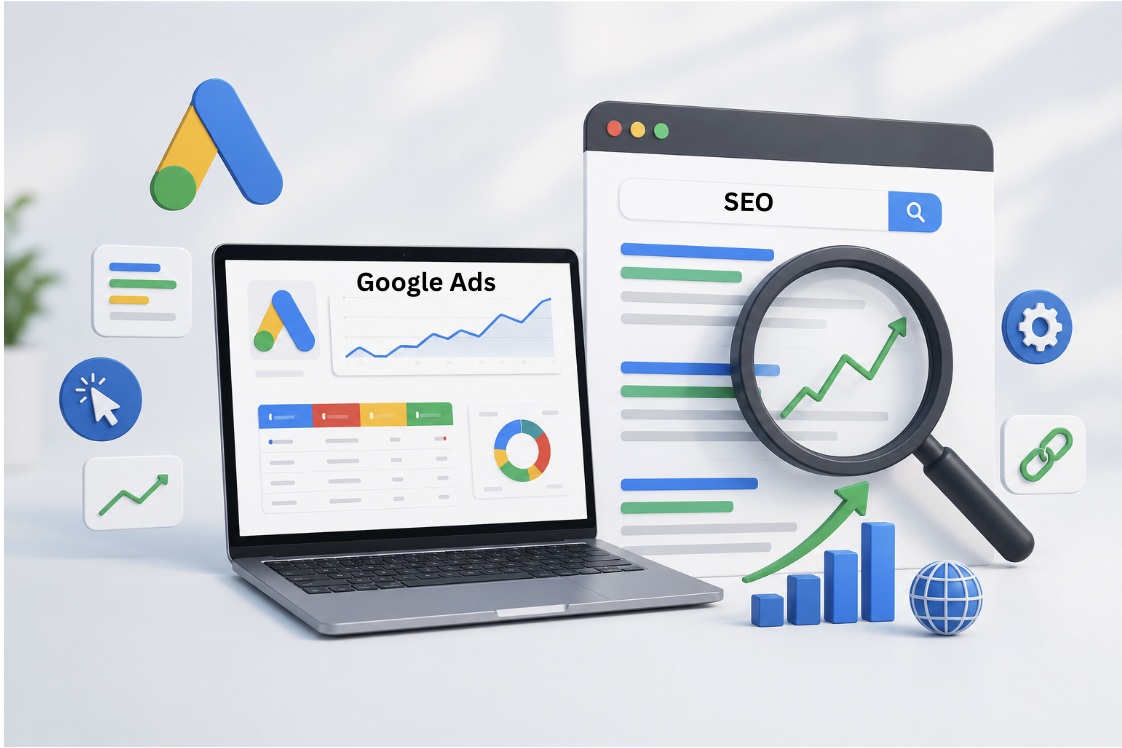
Many businesses view Google Ads and search engine optimization as competing strategies, but they are most effective when used together.
Google Ads provides immediate visibility and traffic, while SEO builds long-term organic growth. Advertising can generate results quickly, while organic rankings create sustainable traffic over time.
Businesses that invest in both channels often create a stronger and more resilient marketing strategy than those relying exclusively on either paid or organic traffic.
Final Thoughts
Google Ads can be an incredibly powerful growth channel for e-commerce businesses, but success starts with the fundamentals. Understanding your numbers, implementing accurate conversion tracking, maintaining a high-quality product feed, selecting the right campaign types, and giving campaigns time to learn all play a critical role in long-term performance.
Most profitable campaigns are not built on complicated tactics or hidden tricks. They are built on solid fundamentals executed consistently over time. Master the basics first, and you’ll be in a much stronger position to scale profitable advertising efforts as your business grows.
If you’re ready to grow with Google Ads the right way, get in touch with Search Pros today!