
For most new Shopify stores, the biggest challenge is not scaling. It is getting the first sale and then building enough momentum to reach consistent sales on Shopify. Many founders assume this requires going viral on social media.
The problem is that the approach is unpredictable and rarely sustainable.
If you are looking to understand how to get your first 100 Shopify sales in under 90 days, the answer lies in building a structured system with advertising.
Successful stores focus on three core areas: a strong offer, consistent traffic, and a store that converts efficiently. When these elements work together, growth becomes repeatable.
Why Most Stores Struggle to Generate Sales
Most Shopify stores fail early because they lack visibility. A well-designed Shopify store with strong product pages and high-quality product photos will not generate sales without traffic.
Many new store owners rely heavily on organic social media, posting regularly on an Instagram page or experimenting with content marketing. While organic channels can be valuable over time, they are slow to produce results. The timeline depends on consistency, audience building, and community engagement.
Without a steady traffic source, most stores remain stuck at zero sales. More importantly, they lack the data needed to improve performance.
To move forward, the focus must shift from passive strategies to actively driving traffic.

Build an Offer That Converts
The foundation of any successful Shopify store is a compelling offer. According to Shopify, 70% of online shopping carts are abandoned, mostly because shoppers feel the price is too high or don’t clearly see the value.
Many new Shopify stores fail because they select existing products without validating demand. Established Shopify merchants succeed because they understand their audience and position their offer around outcomes, not features.
To improve your chances of success, evaluate your offer using these criteria:
- Does the product solve a clear and relevant problem for potential customers
- Is the value immediately understandable on your landing page
- Is the price aligned with the perceived benefit and average order value
For early traction, products priced within an impulse-buy range tend to perform better. This reduces friction and increases the likelihood of converting cold traffic.
You can also strengthen your offer by including incentives such as a free gift or a free sample. These additions help create urgency and increase perceived value without significantly increasing costs.
Use Paid Advertising to Control Traffic
Relying solely on organic channels limits your ability to grow quickly. If your goal is to reach your first customers within a defined timeframe, you need a predictable traffic strategy.
Paid advertising provides that control.
Instead of waiting for visibility, you can use paid ads to reach new customers immediately. Platforms such as Google Ads and Instagram ads allow you to target users based on specific interests, behaviors, and intent.
Among these, Google Shopping ads are particularly effective for e-commerce. They place your product in front of users who are actively searching, making them more likely to convert compared to cold traffic from social media.
It is important to understand that not all traffic performs equally. Warm audiences convert at a higher rate because they are already familiar with your brand. However, in the early stages, most of your traffic will be cold. This makes your offer and landing page even more critical.
Start with a controlled ad spend and test different creatives, audiences, and messaging. Running ads is not just about acquiring customers. It is about collecting data that helps refine your approach.
Optimize Your Store for Conversions
Driving traffic is only effective if your store converts visitors into customers. The average Shopify store converts at around 1-2%, while high-performing stores exceed this benchmark.
If your store converts below this range, there are several areas to address.
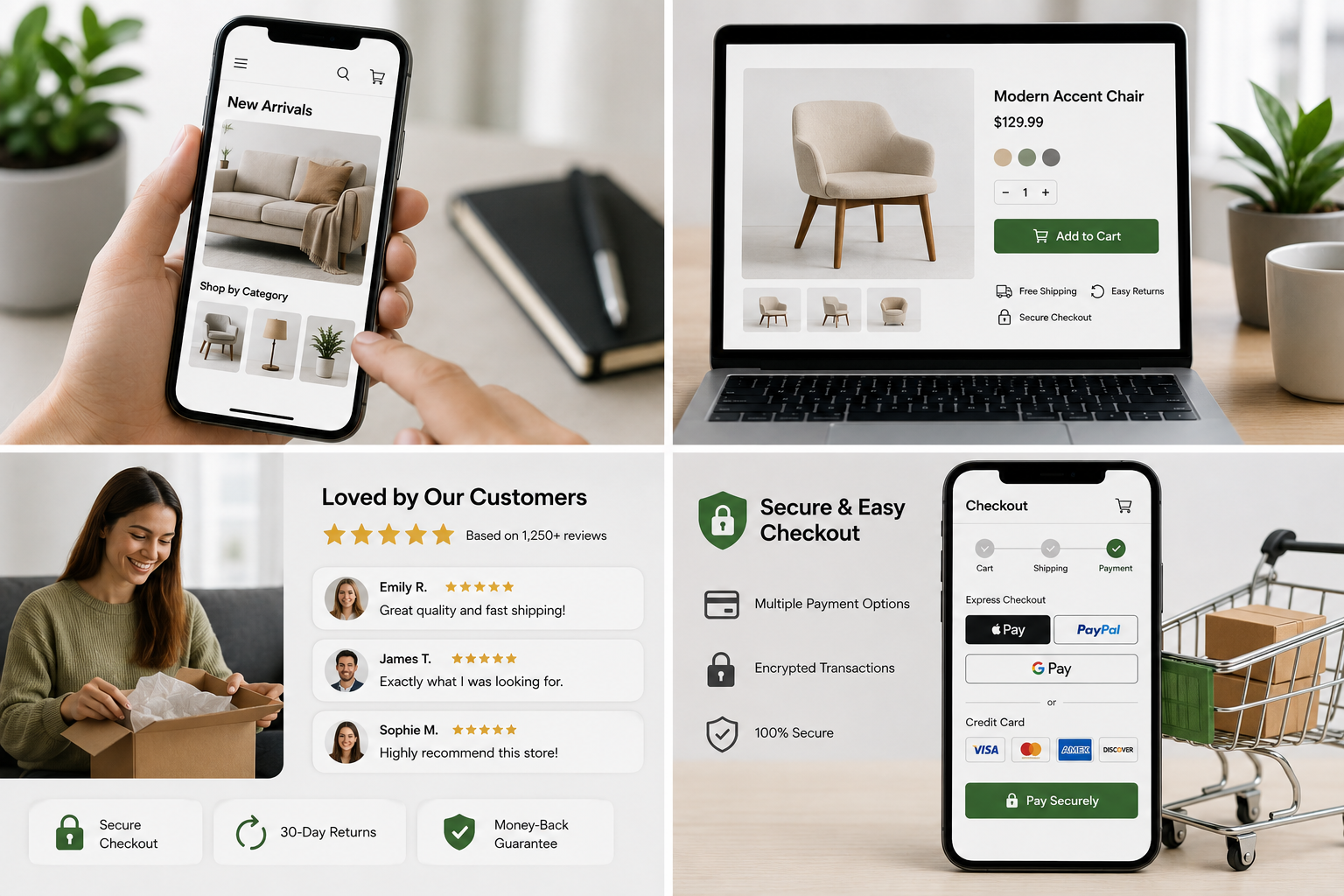
First, ensure your store is optimized for mobile users. Most traffic will come from mobile devices, so speed and usability are essential.
Second, improve clarity across your product pages. Visitors should immediately understand the product, its benefits, and why it is relevant to them. A clear call to action is critical at this stage.
Third, build trust. Trust signals such as reviews from real customers, transparent policies, and secure checkout options help reduce hesitation. Offering multiple payment options also improves the likelihood of conversion.
Finally, address cart abandonment. Many potential customers drop off during checkout due to friction. Common causes include unexpected shipping costs, forced account creation, or a complicated process.
Simplifying checkout, offering multiple payment options, and sending email campaigns to recover abandoned carts can significantly improve results.
Leverage Email Marketing Early
According to Shopify, consumers spend 128% more when shopping from emails than using other methods. It is often overlooked by new Shopify stores, yet it plays a crucial role in converting and retaining customers.
From the beginning, focus on email capture. Build a list of email subscribers through pop-ups, incentives, or content marketing. Once you have a list, implement email flows such as:
- Welcome sequences for new subscribers
- Abandoned cart reminders
- Post-purchase follow-ups
These email campaigns help convert potential customers who did not purchase initially and increase the likelihood of repeat customers.
Over time, your email marketing efforts will become one of your most profitable channels.
Combine Traffic Sources for Better Results
While paid ads are essential for early traction, a balanced strategy includes both paid and organic channels.
Organic social media, content marketing, and community engagement help build brand awareness and trust over time. Platforms like Instagram allow you to engage directly with your audience, share product updates, and build credibility.
Your personal network can also serve as an initial traffic source. Early support from friends, colleagues, or the Shopify community can help generate your first customers and provide valuable feedback.
As your store grows, diversify your traffic sources. Relying on one platform increases risk and limits scalability.
Focus on Data and Continuous Improvement
The process of reaching your first 100 sales is iterative. Each step provides insights into what is working and what needs adjustment.
For example:
- If you are driving traffic but not generating sales, your offer or landing page may need improvement
- If your ads receive no engagement, your targeting or messaging may be misaligned
- If you experience high cart abandonment, your checkout process requires optimization
By analyzing these signals, you can make informed decisions and improve performance over time.
From First Sale to Consistent Growth
Achieving your first sale is an important milestone, but it is only the beginning. The goal is to build a system that consistently generates sales and attracts new customers.
As your store grows, focus on increasing your average order value, improving your conversion rate, and turning first customers into repeat customers. Strategies such as upsells, bundles, and post-purchase offers can significantly impact revenue.
Ultimately, success in e-commerce is not about short-term tactics. It is about building a sustainable business model that combines a strong offer, effective paid advertising, and a high-performing store.
When these elements are aligned, reaching your first 100 sales becomes not just possible, but predictable within a relatively short timeframe.
Get in touch with Search Pros to start scaling your Shopify store with a proven strategy.