
Homeowners aren’t only typing “kitchen remodeler near me” into Google anymore. They’re increasingly using conversational queries instead of traditional keyword searches, asking ChatGPT, Google AI Overviews, Gemini, or Perplexity which contractors serve their neighborhood, what a renovation should cost, or who has experience with older homes.
For remodelers, traditional rankings still matter, but your website and reputation also need to offer information AI search tools can reference.
This is often called Answer Engine Optimization (AEO) or Generative Engine Optimization (GEO). It doesn’t replace SEO. It builds on the same fundamentals: accurate business information, useful content, credible reviews, and a website search engines can access.

Why AI Search Matters for Home Remodeling Companies
Homeowners want evidence that a contractor can handle the job, communicate clearly, and work in their area.
In Houzz’s 2026 survey of U.S. renovating homeowners, 22% said they had used AI tools during their projects. Most used them for design ideas, visualizing concepts, or comparing options.
Not every homeowner asks AI to choose a contractor, but artificial intelligence is becoming part of renovation research. Make your expertise easier to discover when those questions arise.
1. Get Your Business Information Right
Start with the basics. Review your website and key business listings for:
- Contact details: The correct business name, phone number, website, and address, where applicable.
- Service areas: Only the cities and neighborhoods you actually serve.
- Services and categories: Accurate descriptions of your remodeling specialties.
- Project photos: Recent, genuine work that reflects your services.
Check Google Business Profile, Bing Places, Houzz, Yelp, and relevant local directories. Correct outdated information before adding more content.
Google says local results are mainly influenced by relevance, distance, and prominence. Complete business information and genuine reviews help homeowners evaluate you, but no single update guarantees a higher ranking.
Don’t overlook Bing. Microsoft’s Copilot and Bing AI experiences can reference web content, and Bing Webmaster Tools now includes an AI Performance report showing when eligible pages are cited. Keeping your Bing Places listing current is worthwhile for the same reason you maintain your Google profile.
2. Write Service Pages That Answer Real Questions
A service page that says “We provide quality bathroom remodeling” tells homeowners very little. Someone planning a renovation wants to know what the work involves, and homeowners planning a project need to understand the scope, budget, and timing, as well as how the process will affect their house.
Create a dedicated page for each core service, such as kitchen remodeling, bathroom renovations, home additions, or basement finishing. Each should answer:
- What does the service include? Explain the work and typical project scope.
- What affects cost and timing? Address materials, permits, scheduling, and potential delays, and note that modern AI tools can improve scheduling and budget accuracy while helping catch budget gaps earlier.
- What should homeowners prepare for? Explain decisions, access, and disruption.
- What have you completed? Link to relevant projects, service areas, and customer experiences.
For example, a kitchen page could explain how moving walls or plumbing affects scope. A bathroom page could cover waterproofing and ventilation.
Give a direct answer first, followed by useful detail. This serves people reading quickly and helps search systems find a clear response to a specific question, supports more informed decisions, and can reduce uncertainty before work begins. Add links to relevant projects and a simple way to request an estimate.
3. Make Location Pages Worth Reading
Local SEO matters because remodeling is a local service. But copying the same page for ten cities and swapping the place name isn’t helpful.
A useful location page should reflect work you actually perform there, including local projects, home types, and relevant permit considerations.
For example, a Dallas-area remodeler might show a completed kitchen renovation in Plano and explain the challenges of updating that home’s current layout. That tells a more convincing story than repeating “best kitchen remodeler in Plano” throughout the page.
Only create pages for places you genuinely serve. Link each one to its corresponding service page and relevant project examples.
4. Give Project Photos the Context They Deserve
Before-and-after photos are powerful, but a gallery without descriptions leaves questions unanswered. Give every featured project a short explanation of:
- The starting point: The homeowner’s goal and the room’s original limitations.
- The work: What changed, such as moving a wall, adding storage, or upgrading lighting.
- The result: How the finished space functions better, helping clients picture the final result with more confidence, with the project location when appropriate.
A single-wall kitchen renovation, for example, might involve reworking cabinetry and lighting to improve storage and circulation. Use accurate photo descriptions and alt text so homeowners and search engines have context.
You can also show design sketches, basic floor plans, or a mood board alongside finished photos when you have permission to share them. AI-powered home design software can help clients explore ideas, but a rendering should be clearly identified as a concept, not presented as the actual space or a completed project. That distinction protects trust and sets realistic expectations about project outcomes.

5. Earn Honest Reviews and Independent Mentions
Reviews offer perspective your own website can’t provide. A homeowner reading about your workmanship and communication wants to hear from people who have hired you.
Make review requests a normal part of your closeout process. After the final walkthrough, invite customers to share their honest experience and provide a direct review link. Don’t ask them to insert certain keywords or offer incentives for positive feedback. Google prohibits manipulating review content.
Build credibility through Houzz, relevant directories, relationships with designers and suppliers, and legitimate local coverage.
Community discussions, including local forums and Reddit, may appear in AI-supported research. But there’s no credible shortcut through manufactured conversations or planted endorsements. Genuine reputation-building is the better long-term investment.
6. Publish Helpful Content, Not Just More Articles
Think about the questions you answer every week. Useful article topics include:
- How much does a bathroom remodel cost in [city]?
- Can homeowners stay in the house during construction?
- When is changing a floor plan worth it?
- What happens when a contractor discovers outdated plumbing?
These topics reflect real decision making. Answer the question early, then explain the variables. For cost articles, address materials, labor, home condition, and scope rather than suggesting one price fits every project.
Include hands-on experience when possible. A lesson learned from a completed job is more useful than a generic paragraph that could describe any remodeling company. Update articles when costs, regulations, or your services change. Accuracy matters more than publishing for the sake of volume.
7. Keep the Website Technically Sound
Even the best content can’t help if search engines have trouble reaching it. Check that important pages are indexable, mobile-friendly, fast enough for visitors, and connected through sensible internal links.
Use descriptive page titles, clear headings, readable text, and consistent contact information. Appropriate structured data can support your broader SEO work, but Google says there is no special schema markup required to appear in AI Overviews or AI Mode.
Skip robotic phrases and repetitive FAQs. Write clear, useful content for homeowners.
8. Check How Your Business Appears in AI Search
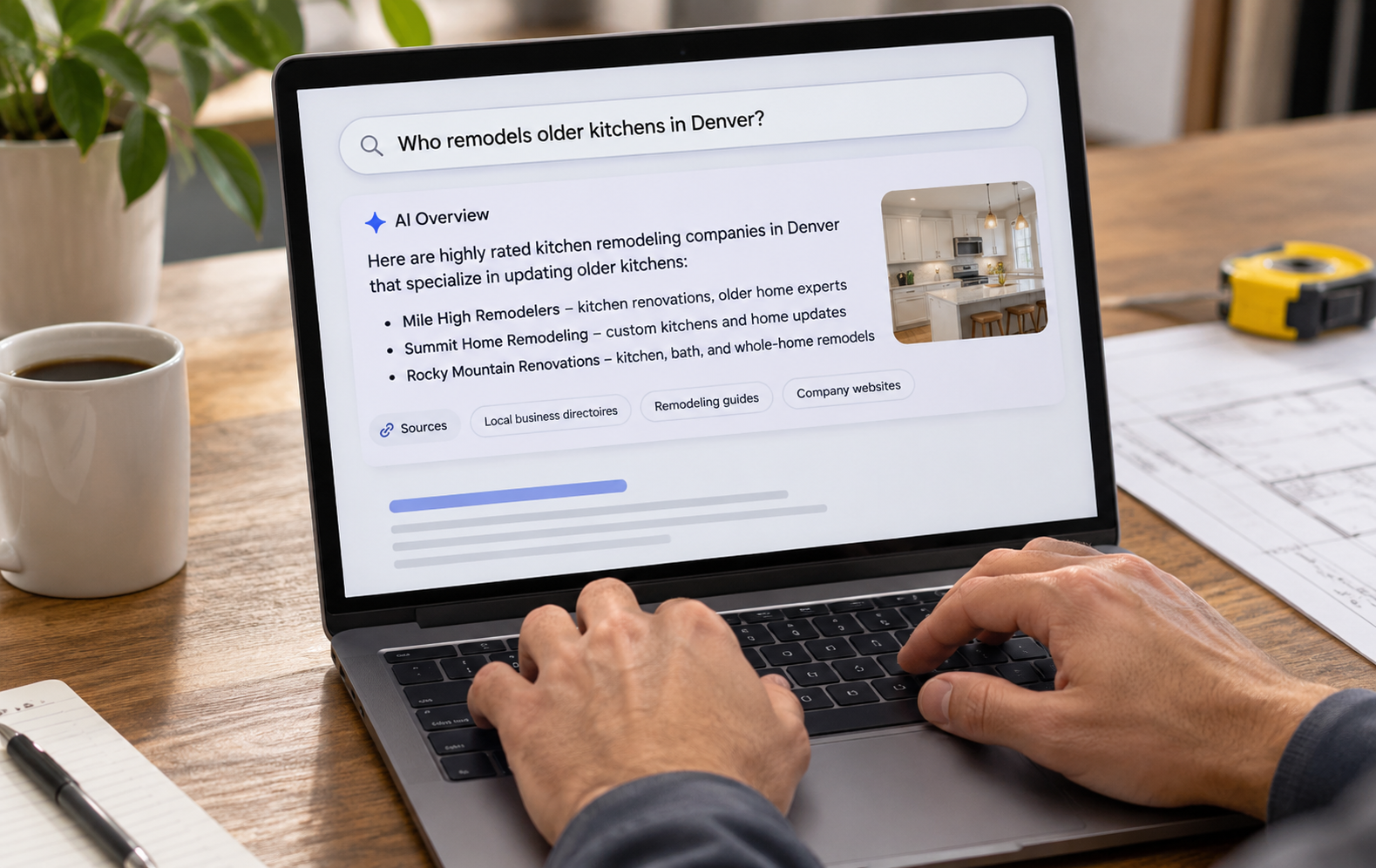
Try questions a homeowner might ask: “Who remodels older kitchens in [city]?” “What should I ask a bathroom contractor?” or “Which companies handle home additions near me?”
Note whether your business appears, which sources are referenced, and whether the information is correct. Results can vary by platform, location, and wording, so don’t treat a single answer as a reliable ranking.
Use Google Search Console, Bing Webmaster Tools, website analytics, and lead tracking alongside these spot checks. If a competitor’s detailed project page keeps showing up, compare the usefulness of your own page rather than copying their wording.
A Simple 90-Day Starting Plan
- Days 1 to 30: Correct business listings and improve two high-value service pages.
- Days 31 to 60: Publish two project case studies, request honest reviews, and improve a priority location page.
- Days 61 to 90: Publish two useful articles, fix technical issues, and check your AI search presence. Track inquiries alongside mentions.
Final Thoughts
Getting recommended by AI search in 2026 isn’t about a secret algorithm trick. It’s about showing homeowners what you do, where you work, and why they can trust you. Accurate listings, helpful content, real projects, and strong local SEO create a foundation for both traditional search and AI discovery.
Want to Improve Your AI Search Visibility?
At Search Pros, we help remodeling businesses strengthen their SEO and AI search presence. We look at how your business appears across relevant search experiences, identify opportunities to improve visibility, and track and report on progress so you know what’s working.
Get in touch to get clearer picture of how homeowners are finding your business.