
Google Ads helps your remodeling business reach homeowners looking for contractors. Whether someone needs a kitchen renovation, bathroom remodel, or home addition, appearing in relevant search results can turn that interest into a valuable business opportunity.
However, successful advertising isn’t just about getting clicks. It’s about attracting homeowners with the right project, budget, location, and timeline.
At Search Pros, a Dallas-based remodeling marketing agency, we help remodeling companies build advertising strategies focused on qualified inquiries and business growth.
This guide explains how to use Google Ads for remodelers to generate more leads, improve lead quality, and make your advertising budget work harder.

Why Google Ads Works for Remodeling Companies
Homeowners often search online for contractors before starting a remodeling project. Google Search Ads help your business reach these potential customers when they’re actively looking for services.
Key benefits include:
- High-intent traffic: Reach homeowners searching for remodeling services.
- Location targeting: Focus on cities and neighborhoods you serve.
- Budget control: Adjust spending based on demand and business goals.
- Service-specific ads: Promote kitchens, bathrooms, and home additions.
- Measurable results: Track calls, form submissions, and consultations.
The goal is to attract qualified homeowners who are ready to discuss their remodeling projects, not just increase website traffic.
1. Define What Makes a Qualified Remodeling Lead
Before running Google Ads, define what a qualified lead looks like for your remodeling business. Not every inquiry is a good fit.
A qualified lead typically:
- Lives within your service area.
- Needs a remodeling service you offer.
- Has a realistic budget and timeline.
- Owns the property or can approve the project.
- Is ready to discuss an estimate or consultation.
For example, if you specialize in $50,000+ kitchen remodels, a homeowner seeking a $3,000 cabinet refresh may not be the right fit.
Defining your ideal customer helps improve lead quality and create a more targeted marketing plan.
2. Structure Campaigns Around Your Remodeling Services
When running Google Ads, organize campaigns by service rather than promoting everything in one campaign.
For example, create separate campaigns for:
- Kitchen and bathroom remodeling.
- Whole-home renovations.
- Home additions.
- Basement finishing and outdoor living.
Each campaign should feature relevant keywords, ad copy, and a dedicated landing page showcasing your work.
For local businesses serving multiple cities, consider location-specific targeting. This approach helps your remodeling business improve lead quality, generate more leads, and use its marketing budget effectively.
3. Target High Intent Keywords
Focus on high intent keywords that attract homeowners actively searching for remodeling contractors or estimates.
Examples include:
- kitchen remodeling contractor near me.
- bathroom remodeling company.
- custom kitchen remodel Dallas.
- home addition contractor.
- bathroom remodel estimate.
These keywords typically attract more qualified leads than informational searches like “DIY bathroom remodel.” Long-tail keywords, such as “custom kitchen remodeling contractor in Dallas,” can also help reach homeowners with specific needs and stronger hiring intent.
However, cost-related searches can still attract potential customers researching their options.
Use Negative Keywords to Avoid Wasted Spending
Negative keywords prevent your paid ads from appearing for irrelevant searches. Exclude terms like “DIY,” “jobs,” “careers,” and “free plans” where appropriate.
Regularly review search terms to reduce wasted spending and improve lead quality.
4. Set Up Accurate Location Targeting
Remodeling is a local service, making geographic targeting especially important.
If your company serves Dallas, Plano, Frisco, and surrounding communities, advertising outside those areas may generate inquiries you cannot accommodate.
To improve location targeting:
- Select relevant cities, ZIP codes, or service areas.
- Exclude locations outside your coverage.
- Review geographic performance regularly.
- Tailor messaging to important local markets.
For many local businesses, targeting people physically in or regularly in the service area is more relevant than including everyone who merely shows interest in that location.
Accurate geographic targeting helps reduce wasted advertising spend while connecting your company with nearby homeowners.

5. Write Ads That Pre-Qualify Homeowners
Your Google Search Ads should highlight what makes your remodeling business stand out while attracting the right homeowners.
Effective ad copy should include:
- Specific services, such as custom kitchen or bathroom remodeling.
- Service areas and locations.
- Experience, credentials, and unique selling points.
- Clear calls to action, such as “Schedule a Consultation”.
Use accurate claims about licensing, warranties, and pricing. Focus on messaging that attracts homeowners whose projects match your services and expertise.
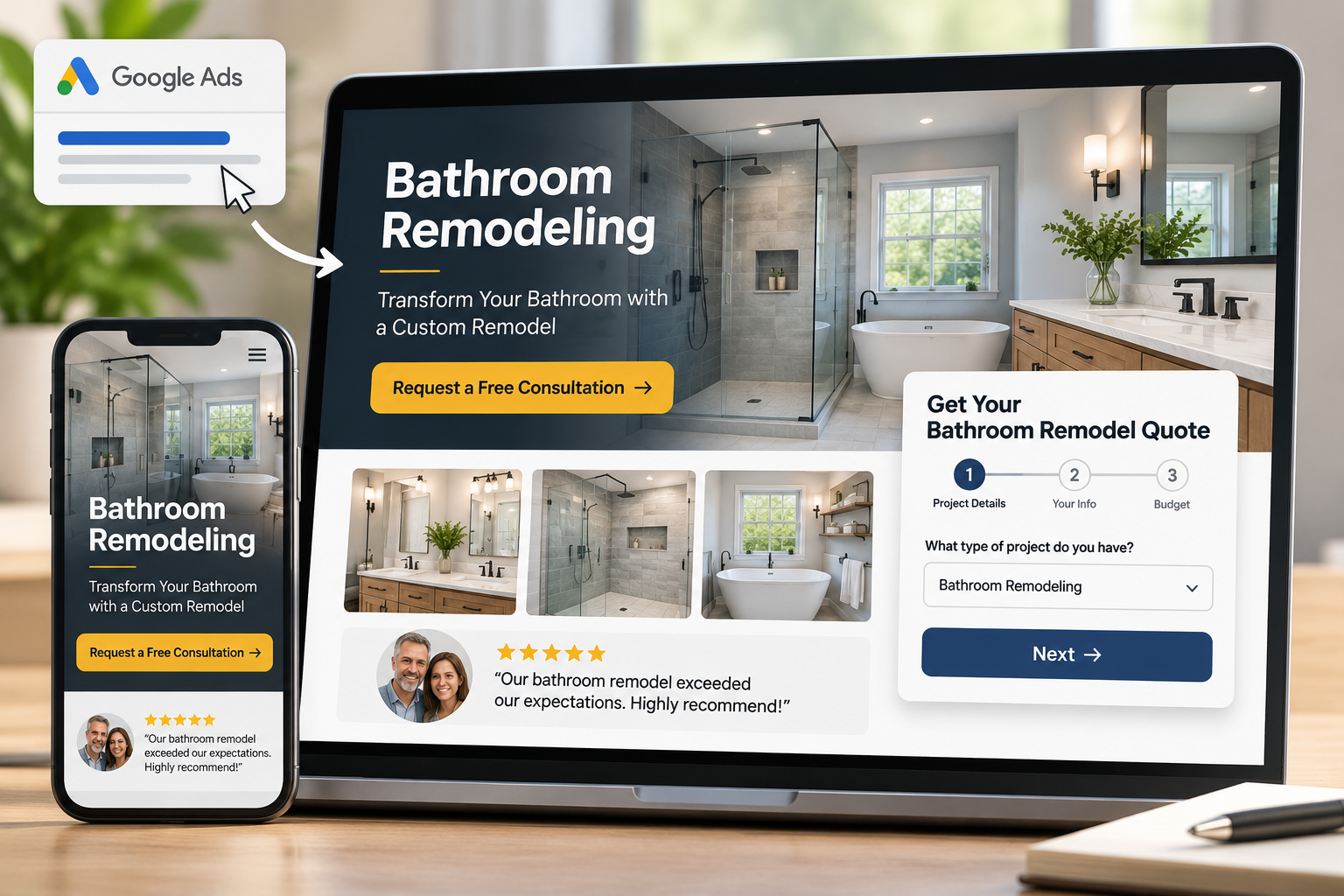
6. Build a Dedicated Landing Page That Converts
A dedicated landing page should match your Google Ads campaign and make it easy for homeowners to take action. For example, a bathroom remodeling ad should lead to a page focused on bathroom renovations, not a generic homepage.
An effective landing page should include:
- Clear headlines highlighting your remodeling services.
- High-quality project photos showcasing completed renovations.
- Customer reviews and testimonials to build trust and credibility.
- A strong call to action encouraging consultations or estimates.
- A mobile-friendly, multi-step form to collect project details and qualify leads.
Keep forms simple, asking for essential information such as contact details, project type, and budget range. A relevant, user-friendly landing page can improve conversion rates and help generate more qualified leads.
7. Track Leads and Optimize Your Bidding Strategy
When running Google Ads, track conversions that reflect real business opportunities, not just clicks and impressions.
Key metrics include:
- Phone calls and form submissions.
- Consultation requests and booked appointments.
- Qualified estimates and signed contracts.
Use call tracking and connect your CRM with Google Ads to identify which campaigns generate qualified leads and customers.
Choose the Right Bidding Strategy
Google Ads offers strategies like Manual CPC, Maximize Conversions, and Target CPA. Choose based on your budget, goals, and conversion data.
Automated bidding works best with accurate tracking. Where possible, use offline conversion data to help Google Ads prioritize qualified leads over low-value inquiries.
8. Improve Results With Ad Assets and Local Services Ads
Ad assets provide additional information alongside your search ads, helping homeowners explore your services or contact your business.
Useful options include:
- Call assets: Encourage phone inquiries.
- Sitelinks: Direct users to service pages, portfolios, or reviews.
- Location assets: Display relevant business location information.
- Callouts: Highlight service benefits and differentiators.
- Lead forms: Simplify inquiries for eligible campaigns.
Eligible remodelers may also benefit from Google Local Services Ads, which typically charge for qualifying leads rather than clicks.
Availability and eligibility vary by location and service category, so check Google’s current requirements before including them in your advertising strategy.
9. Measure Cost Per Qualified Lead, Not Just Lead Volume
A low cost per lead doesn’t always indicate a successful campaign.
Imagine spending $2,000 on two campaigns. One generates 25 inquiries but only five qualified leads. The other generates 15 inquiries, including ten qualified leads.
The first campaign costs $80 per inquiry, while the second costs approximately $133.
However, the cost per qualified lead is $400 for the first campaign and $200 for the second.
Despite producing fewer total inquiries, the second campaign delivers better-qualified opportunities for the same investment.
Track consultation bookings, customer acquisition costs, and signed projects to understand your advertising results more accurately.
For a remodeling business, profitable projects matter more than inexpensive clicks.

Common Google Ads Mistakes Remodelers Should Avoid
Several preventable mistakes can reduce the effectiveness of paid ads:
- Sending all visitors to a generic homepage.
- Targeting broad, irrelevant keywords.
- Ignoring negative keywords.
- Advertising outside your service area.
- Failing to track phone calls.
- Optimizing for lead volume instead of lead quality.
- Responding slowly to inquiries.
Regular campaign reviews and a reliable follow-up process can help improve results over time.
How Search Pros Helps Remodelers Generate Better Leads
Successful Google Ads campaigns connect the right keywords, geographic targeting, landing pages, and conversion tracking into one coordinated strategy.
At Search Pros, we help remodeling companies develop targeted paid advertising campaigns focused on attracting homeowners who are actively looking for their services.
Whether you’re launching your first campaign or improving an existing account, we can help you build a marketing plan designed around your services and growth goals.
Get in touch to see how we can help.