
If your Facebook ads are not converting, the problem is often not targeting. In many cases, businesses focus too much on audiences and small tweaks inside Facebook Ads Manager, while ignoring the real factor that drives results today: ad format.
Meta Ads now prioritizes ad creative formats that capture attention quickly. When someone sees your ad on the Facebook app, the algorithm measures early engagement such as scroll stops, video views, and interactions.
If engagement is strong, the ad gets more reach across placements such as Facebook Stories and the Audience Network. Meta’s creative best practices also recommend using engaging visuals and clear messaging to capture attention quickly and improve ad performance.
That is why the best Facebook ads for e-commerce in 2026 rely on strong creative formats rather than complex targeting strategies.
Why Ad Format Matters More Than Targeting in 2026
In the past, running Facebook ads was largely about audience targeting. Media buyers spent hours building custom audience groups, testing lookalike segments, and adjusting interests inside Ads Manager. While targeting still plays a role, Meta now relies heavily on machine learning and behavioral data to identify potential customers automatically.
Tools like the Meta Pixel, Facebook Pixel, and Conversion API allow advertisers to track conversions and send clean data back to the platform. This gives the algorithm the ability to determine who is most likely to purchase without relying entirely on manual targeting.
Because of this, ad creative formats have become one of the most important factors affecting how campaigns perform. If your ad captures attention quickly and generates engagement, Meta will distribute it more aggressively. If it fails to do so, the platform limits its reach regardless of your targeting settings.
Short Form Video Ads Win the Cold Scroll
Among all Facebook ad formats, short-form video ads consistently perform best for e-commerce brands. Social platforms are built around fast scrolling behavior, especially on mobile devices. Video ads that immediately capture attention are more likely to generate engagement signals that help campaigns perform better.
Successful video ads usually feature vertical full-screen visuals designed for mobile viewing. Short videos between six and twenty seconds tend to work best because they match how people consume content on social platforms. According to a study by Chisan Chen on short video advertising effectiveness, short videos are more effective at capturing attention and increasing user engagement in digital advertising environments.
Product demos, quick transformations, and eye-catching visuals help interrupt the scroll and encourage users to watch longer. Once Meta detects that users are engaging with the video, the platform expands distribution and lowers the effective ad spend required to reach potential customers.
UGC-Style Creator Ads Build Trust
Another ad format that performs extremely well in e-commerce campaigns is UGC style creator content. UGC stands for user-generated content, but in many cases, these ads are created by brands rather than traditional influencers.
These ads typically feature real people explaining why they use a product. Instead of polished brand messaging, the content feels casual and authentic, similar to a product recommendation from a friend. This format works because it creates social proof and builds trust with potential customers.
Many successful creator ads are recorded on mobile devices and focus on explaining a problem and how the product solves it. The goal is not to present a long list of features but to communicate the product’s value quickly. When real customers appear in ad creatives, it helps viewers imagine themselves using the product, which often increases the click-through rate and conversion potential.

Advantage Plus Shopping Campaigns When They Work
Advantage Plus Shopping campaigns have become one of the most widely used campaign types in Meta advertising. However, many businesses misunderstand how these campaigns function.
Advantage Plus does not fix weak campaigns automatically. Instead, it amplifies ads that are already performing well. If the creative formats are strong and the campaigns already generate engagement and conversion data, Advantage Plus can help scale results more efficiently.
Brands that see the best results with Advantage Plus usually have several ad creatives running simultaneously. They test different formats such as video ads, carousel ads, and static images, then allow the algorithm to distribute budget toward the highest performing ads.
Without strong creative formats, even well-structured campaigns struggle to scale.
Static Image Ads Still Convert in Retargeting
Although video ads dominate most prospecting campaigns, static images still have an important role in Facebook advertising. Image ads are especially effective in retargeting campaigns where potential customers already recognize the product.
The most effective static images communicate the product value instantly. Visual comparisons such as before-and-after transformations, problem-versus-solution imagery, or old-versus-new technology often perform well. These formats allow users to understand the benefit in less than a second.
Static images can also reinforce offers that users previously saw in video ads. When used in retargeting campaigns, they remind users of the product and encourage them to return to the website to complete a purchase.
Carousel Ads for Multiple Products
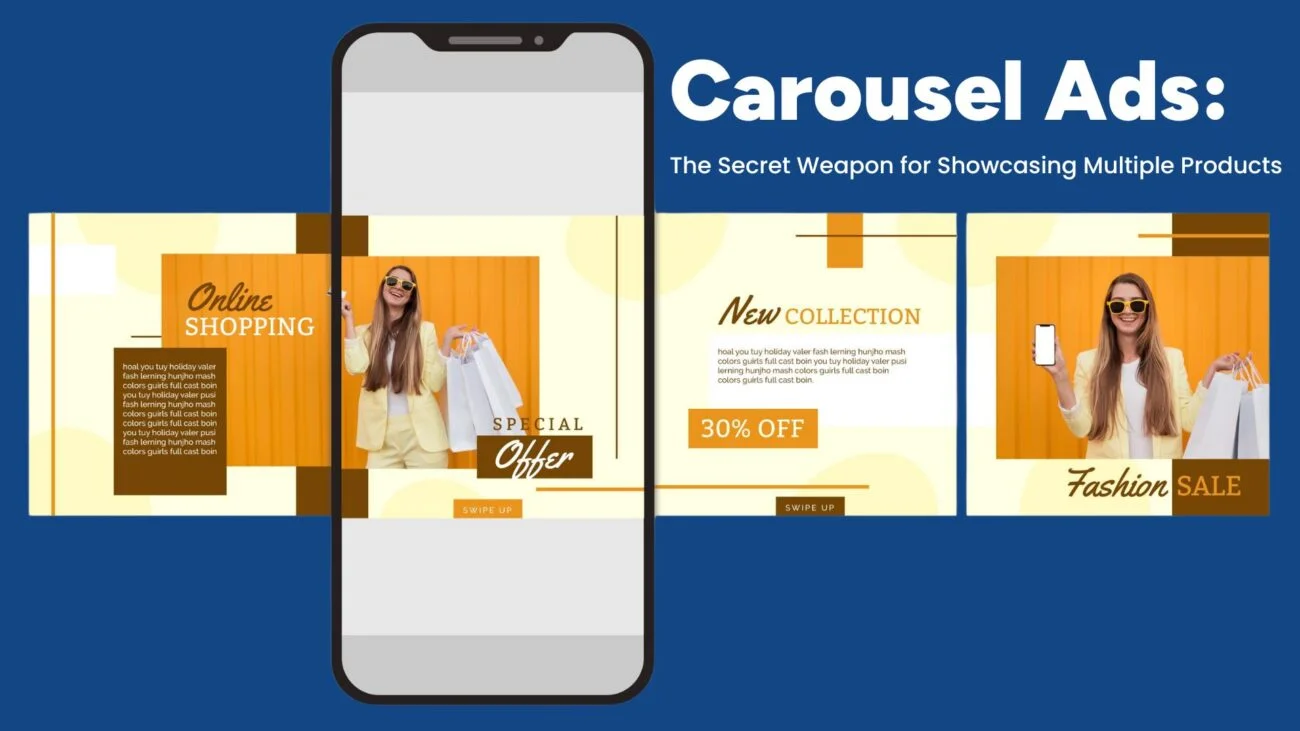
Carousel ads remain a powerful format for e-commerce businesses that want to highlight multiple products or product features within a single ad. Each card in a carousel can display a different image, product variation, or benefit.
This format works well for brands with large product catalogs or stores that want to showcase multiple products at once. Carousel ads can also demonstrate how a product works step by step, helping potential customers understand its value quickly.
Because carousel ads allow multiple images in a single ad, they often increase engagement and click-through rate compared to single-image ads.
Dynamic Product Ads Capture Purchase Intent
Dynamic product ads are one of the most effective ways to retarget users who have already visited your website. These ads use data collected through the Facebook pixel and Meta pixel to automatically promote products from your product catalog.
When someone views a product but does not purchase it, dynamic ads can show that same product again later in their feed. This reminder helps bring potential customers back to the website and often leads to higher conversion rates.
Many e-commerce brands use dynamic ads for cart abandonment campaigns or to promote related products to previous visitors.
Copy Should Support the Creative
Another important shift in Facebook advertising is how ad copy works alongside creative formats. In many high-performing campaigns, copy plays a supporting role rather than leading the message.
Instead of long paragraphs explaining every feature, successful ads often use short conversational text that complements the visual content. The goal is to provide context for the creative while allowing the image or video to capture attention.
For cold audiences especially, the creative should communicate the core message quickly while the landing page provides the detailed explanation needed to convert visitors into customers.
Funnel Aware Format Sequencing
Many e-commerce brands look for a single winning ad creative to improve their Facebook ad performance. In reality, the highest performing Meta ads accounts rely on multiple formats working together. Customers rarely go from a cold scroll to a purchase in one step. Instead, they move through stages such as awareness, understanding, trust, and finally decision.
Different Facebook ad formats work best at different stages. Short-form video ads usually capture attention first and introduce the problem or product. UGC-style creator ads help build trust by explaining why the product works. Static images or carousel ads reinforce the offer and highlight the transformation. Finally, retargeting through product page visits or dynamic ads helps convert interested users.
Brands that structure their campaigns this way often see lower cost per acquisition, stronger marketing efficiency, and more stable campaign performance.
Why Meta Still Wins for Demand Generation
Meta remains one of the most powerful platforms for demand generation. Platforms like Google capture existing intent when users search for a product. Facebook and Instagram work differently. They introduce products to people before they actively start searching.
The Meta algorithm analyzes engagement signals such as what users watch, interact with, and revisit. These signals help identify potential buyers before they ever search for the product. This is why engagement-heavy campaigns on Facebook often lead to purchase spikes later.
Because of this, brands that only measure last click conversions often underestimate the impact of Facebook advertising. Meta influences the beginning of the customer journey long before the final purchase.
The Practical Creative Mix
For most e-commerce brands, successful Meta advertising relies on a balanced mix of ad creative formats. The most effective accounts usually run a combination of short-form video ads, creator-style content, and static visuals.
A common structure includes about 40 to 50 percent of short-form video demos designed to capture attention during the cold scroll. About 25 to 35 percent of creatives are UGC-style creator ads that explain why the product exists and build trust with potential customers. The remaining 10 to 20 percent are static problem solution images used for retargeting and reinforcement.
Creative rotation is also important because ad fatigue happens quickly. Many high-performing campaigns refresh ad creatives every two to four weeks to maintain engagement and keep performance stable.
Final Thoughts
The biggest shift in Facebook advertising today is the emphasis on strong ad creative. While targeting still matters, successful Meta ads now depend on creatives that capture attention and quickly drive engagement. Brands using effective video ads, creator-style content, and clear visuals consistently outperform those relying only on audience targeting.
Get in touch with Search Pros to improve your Facebook ads performance and scale your e-commerce campaigns.